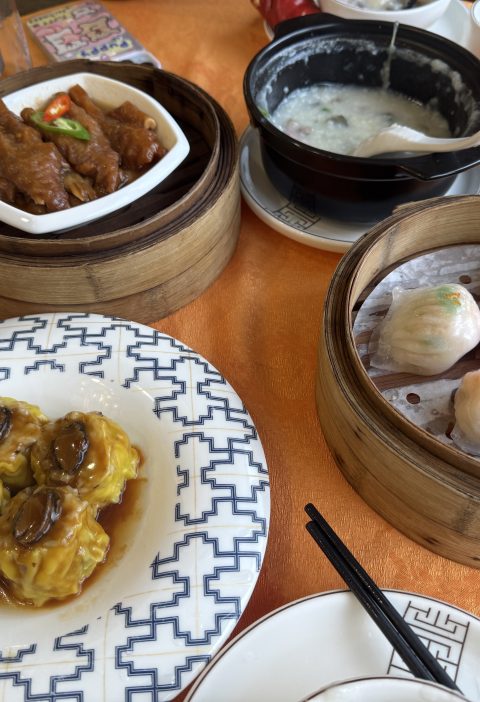
I’ve been in Guangdong for five days now, and I can’t keep up with all the sweet soups alone.
The first time someone ordered one for me, I almost said no. I was full. Stuffed from a huge dinner. But my friend insisted. “It’s soup,” she said. “Sweet soup. You’ll like it.”
A small bowl arrived. I took a spoonful. It was warm, slightly sweet, creamy but not heavy. And somehow, it was exactly what I needed.
Now I order one every chance I get.
What is tong sui?

Tong sui just means “sweet water” in Cantonese. But it’s not water. It’s a sweet soup. Sometimes thick, sometimes thin. Red bean. Black sesame. Taro. Ginger sweet potato.
It’s not like Western desserts—cakes, cookies, pastries. This is different. You eat it with a spoon. Out of a bowl. Warm, usually. Sometimes cold in summer.
People talk about the health benefits. Something about “cooling” and “warming” from traditional Chinese medicine. Some ingredients are supposed to be good for your skin, your digestion, whatever. Honestly? I don’t know if that’s true. I just know it tastes good.
Classic Tong Sui Varieties
Red bean soup (hong dou sha)

This is the one you’ll see everywhere. Red beans cooked down into a warm, slightly sweet, almost porridge-like soup.
The first time I had it, I thought it would be chunky. It wasn’t. The beans had broken down completely — smooth, silky, no chewing required.
In Hong Kong, they sometimes put little glutinous rice balls (tangyuan) in it. Soft, chewy, with sesame paste or peanut butter inside. Those are my favorite.
You can have it hot in winter or cold in summer. I’ve had both. Hot is better. The cold version is fine, but the warmth makes it feel like a hug in a bowl.
The only “secret” is patience. Cook the beans slowly, add sugar carefully. Too much sugar and you lose the bean flavor. Too little and it’s not dessert. Most places get it right.
Mango sago cream (mang guo xi mi lu)

This one is newer than the others. Not traditional. But everywhere now.
It’s mango puree mixed with sago (those tiny white pearls) and coconut milk or evaporated milk. Creamy, sweet, tropical. Like dessert soup that thinks it’s a smoothie.
The first time I had it, I couldn’t believe how much it tasted like fresh mango. Not fake mango flavor. Real mango. That’s because they use ripe ones. Sweet enough on their own — barely any sugar added.
The sago pearls are soft but still have a little chew. That’s the texture you want. If they’re mushy, someone cooked them too long.
Cold version only. Don’t try this hot. It’s not the same.
Black sesame soup (zhi ma hu)

This one looks weird the first time you see it. Grayish-black. Smooth. Thick. Not pretty. But don’t let that stop you.
It’s made from roasted black sesame seeds, ground down with water and sugar until silky. The roasting matters — it brings out this deep, nutty flavor that you don’t get from raw sesame.
The first time I tried it, I was skeptical. It looked like… I don’t know, something you’d put on a roof. But one spoonful and I was hooked. It’s rich, warm, and somehow comforting in a way I can’t explain.
People say it’s good for your hair and blood. Traditional Chinese medicine stuff. I don’t know if that’s true. I just know it tastes good on a cold night.
Get it warm. Not cold. This one doesn’t work cold.
Tofu pudding (dou fu hua)

This one is different from the others. Not a soup. Not a porridge. It’s… pudding. Made from soy milk.
The texture is the whole point. It’s silky, soft, almost jiggly. You eat it with a spoon, and it just… glides. No chewing required.
The first time I had it, I thought it would be bland. Soy milk isn’t exactly exciting. But then came the ginger syrup — warm, sweet, a little spicy. Together, it worked.
You can get it warm or cold. I prefer warm. The ginger comes through better.
Some people eat this savory. With soy sauce and stuff on top. I haven’t tried that. Sweet version is good enough for me.
Papaya and snow fungus (mu gua xue er)

This one surprised me. Papaya I know. But snow fungus? I had no idea what that was. Turns out it’s a white mushroom that looks like a fluffy cloud.
The soup is light, slightly sweet, with chunks of soft papaya and strands of the fungus. The fungus doesn’t taste like much — it’s there for the texture. Kind of chewy, kind of slippery, like jelly that didn’t fully set.
People say it’s good for your skin. Something about collagen. I don’t know if that’s true. But it’s a nice thought while you’re eating it.
This one works better cold. Not warm. Save it for a hot day.
Almond soup (xing ren cha)

If you like that almond extract flavor, you’ll like this. If you don’t… maybe skip it.
It’s made from ground almonds — both sweet and bitter types. The bitter ones give it that sharp, almost floral kick. Without them, it’s just sweet almond milk.
The first time I had it, I wasn’t sure. The smell was strong. But the taste was milder than I expected. Smooth, creamy, not too sweet.
Some people say it helps with digestion. I drank it after a big meal. Did it help? Maybe. Or maybe I just felt better because I was sitting down and not eating anymore.
Get it hot. This one is not a cold dessert.
Where to get it

I haven’t tried every tong sui shop in Guangdong, Hong Kong, or Macau. But here’s what I learned.
Hong Kong
Dessert shops everywhere. Chains like Hui Lau Shan are fine — consistent, reliable, lots of options. But the best one I had was at a tiny shop with no English sign. Just a line of people waiting.
Guangzhou
Shangxiajiu area. Old school. Some shops have been around forever. The red bean soup there was the best I had. You can taste the difference.
Macau
Cantonese + Portuguese influences. Some interesting mashups. I didn’t spend enough time there to find the good ones. But people say there’s stuff you can’t get anywhere else.
My advice:
Don’t chase a specific shop. Walk around. If you see a dessert place with locals inside, go in. Order whatever looks busy. You’ll be fine.
Final thoughts
Look, it’s sweet soup. Not complicated.
But after a big meal, when you’re full and tired, a warm bowl of red bean or black sesame just… hits different. It’s not heavy. Not sugary. Just comforting.
I used to think dessert had to be cake or ice cream. Now I find myself looking for tong sui shops every time I’m in a Cantonese restaurant.
You don’t need to know the history. You don’t need to memorize the health benefits. Just order a bowl. Try it. You might be surprised.
And if you don’t like it? That’s fine. More for me.