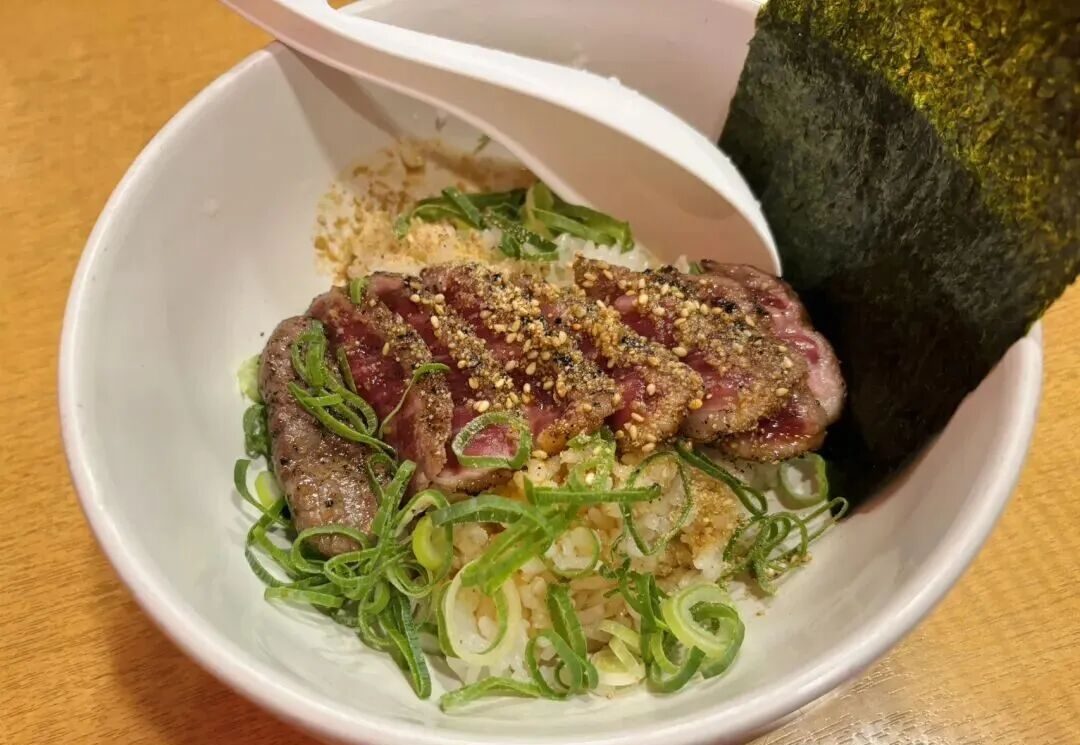
After rice bowls, I moved on to noodles. Ramen, udon, soba — hot, cold, in soup, dipped. Then grilled things. Yakitori. Yakiniku. The stuff you cook yourself at the table.
Here’s what I ate and how much it cost. No fancy intros. Just the food.
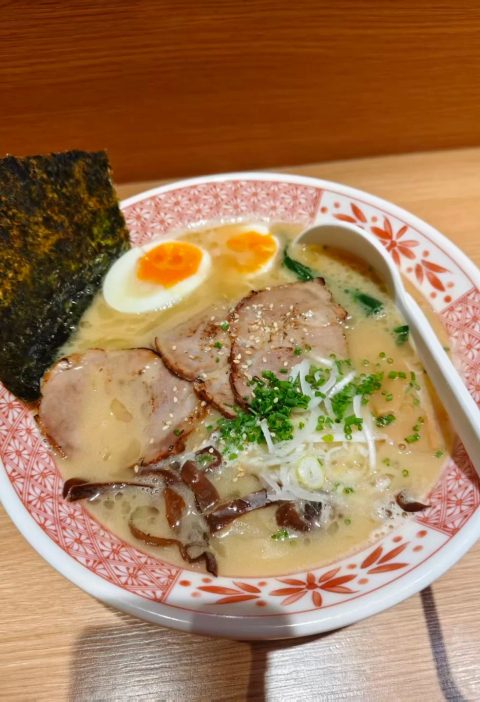
1. Ramen

You probably know what ramen is. But here’s what I learned after eating way too much of it in Japan.
The broth types :
Tonkotsu (Fukuoka) — Pork bone. Creamy, rich, heavy. My favorite.
Miso (Sapporo) — Thick, hearty, great in cold weather.
Shoyu (Tokyo) — Soy sauce based. The classic. Clean and savory.
Shio (Hakodate) — Salt based. Lightest of the four. Easy to mess up.
What it costs:
A basic bowl at a neighborhood shop: 700-900 yen.
Fancier places: 1,500 yen or more.
What I actually order:
Tonkotsu. Every time. I’ve tried the others, but I keep going back to the creamy pork bone one.
My tip: Don’t overthink the “authentic” regional styles. Just go to a shop that looks busy and order whatever they’re known for.
2. Soba (Buckwheat Noodles)

Hot soba comes in a broth (kake soba). Cold soba comes with a dipping sauce on the side (zaru soba). I like the cold one better. Feels cleaner. The hot one is fine, but the noodles can get soft if you don’t eat fast.
What it costs:
Around 1,400 yen. $10 USD.
My take:
Less heavy. Some people love that. I usually end up ordering it when I want to pretend I’m eating healthy.
If you’re in Nagano, they’re known for buckwheat. The soba there is better. Worth trying.
3. Udon (Thick Wheat Noodles)

Udon is thick. Chewy. Almost bouncy. Completely different from ramen or soba.
What it costs:
Crazy cheap. Like 300-500 yen at standing-only shops in train stations. Even at proper restaurants, it’s rarely over 1,000 yen.
Hot or cold?
Hot udon in broth is the classic. Cold udon with dipping sauce is good too. I usually go hot, especially in winter.
My take:
Udon is my second favorite after ramen. It’s simple. No fancy toppings required. Just noodles, broth, maybe a green onion.
Kagawa is apparently the “udon capital.” I’ve never been. The udon I’ve had in Tokyo was good enough for me. You don’t need to travel to a specific prefecture to get a good bowl.
4. Yakiniku (Japanese BBQ)

Yakiniku is Japanese BBQ. You get a table with a grill in the middle. Raw meat shows up. You cook it yourself.
What you’re eating:
Thin slices of beef. Sometimes pork. Sometimes chicken. Vegetables too — mushrooms, peppers, onion. You dip the cooked meat in sauce. Usually tare (sweet-savory) or just salt and pepper.
The all-you-can-eat trap:
All-you-can-eat (tabehodai) is popular. 90 minutes. 120 minutes. You pay a fixed price and order as much as you want.
Here’s the thing: the quality is lower. You’re eating a lot of cheaper cuts. It’s fun, but don’t expect great meat.
What it costs:
Budget all-you-can-eat: 3,000 yen.
Premium wagyu yakiniku: 5,000-10,000 yen per person.
A la carte: Depends on what you order.
My take:
If you want good meat, skip the all-you-can-eat. Pay a little more for a few really good pieces of wagyu. You’ll enjoy it more.
I’ve done both. The cheap version is fine if you’re just hungry and with a big group. But the premium version is the one I still think about.
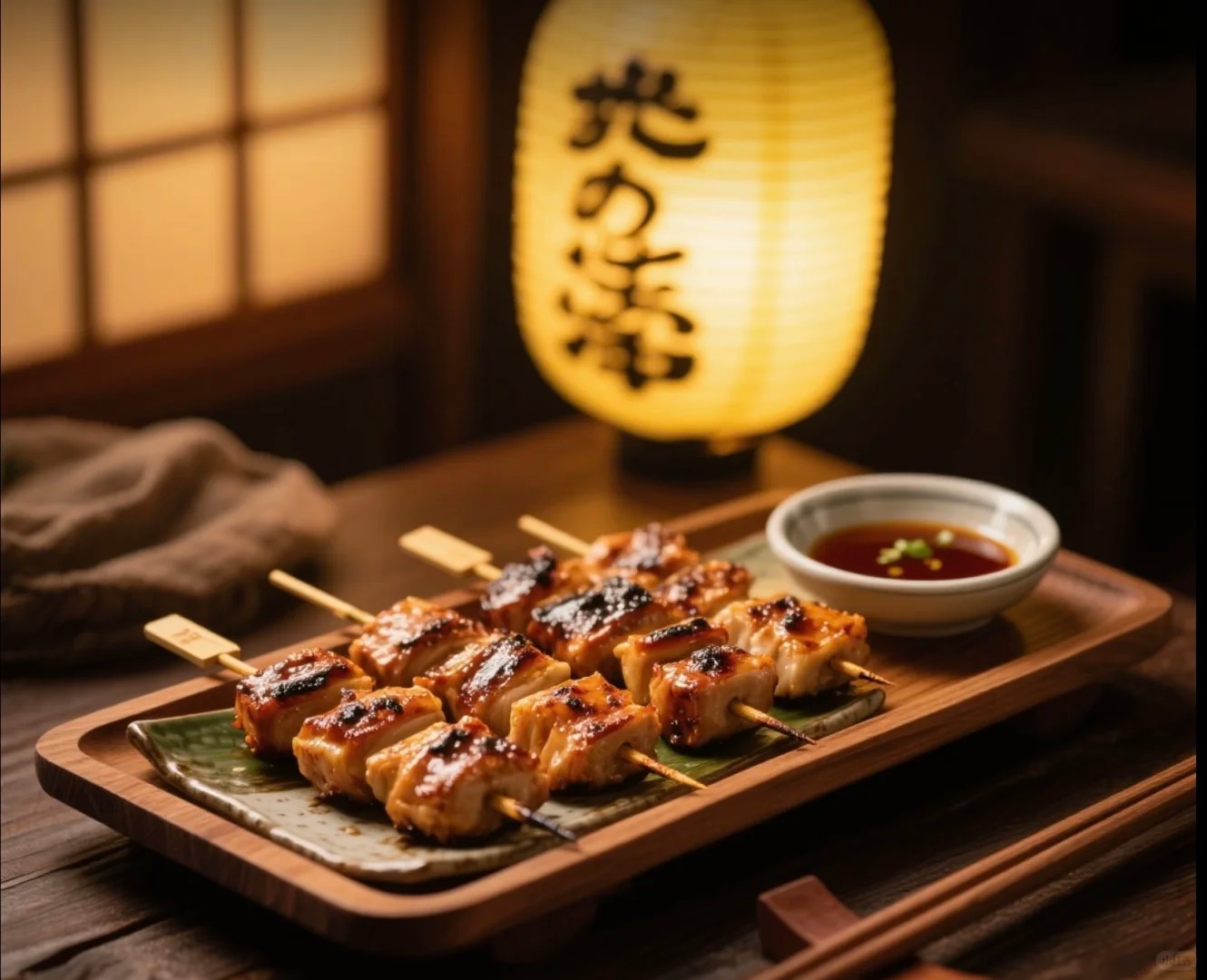
5. Yakitori (Grilled Chicken Skewers)

Yakitori is grilled chicken skewers. That’s it. But they grill every part of the chicken, not just the breast or thigh.
What to expect:
Negima — chicken + green onion. The safe choice. Everyone likes this.
Tsukune — chicken meatball. Usually with a sweet sauce. Good.
Tebasaki — chicken wing. Crispy skin. Messy to eat. Worth it.
Kawa — just the skin. Crispy, fatty, addictive.
Hatsu (heart), Reba (liver), Nankotsu (cartilage) — for the curious. I’ve tried them. They’re fine. Not my first choice.
What it costs:
A set of 3-5 skewers with a drink: around 800 yen.
Where to get it:
Standing bars under train tracks. That’s the real experience. Cheap, loud, fast. Specialty restaurants are nicer, but you’re paying for the atmosphere.
My take:
Yakitori is perfect for when you want a light meal or a snack with beer. I usually order negima and tsukune. Kawa if I’m feeling indulgent. Skip the liver unless you already know you like it.
6. Kushikatsu (Deep-Fried Skewers)

Kushikatsu is from Osaka. It’s basically stuff on a stick, battered and deep-fried. Meat, shrimp, veggies, cheese — if it fits on a skewer, someone has fried it.
What it costs:
Around 2,200 yen for a set course. You get 8-12 skewers. Tasting menu style.
Where to get it:
Osaka’s Shinsekai district. That’s where it started. There are shops there that have been around for decades.
My take:
It’s fun. It’s fried food on a stick. Hard to go wrong. But don’t go out of your way for a “famous” 70-year-old shop unless you really care. The random ones are fine too.
7. Sushi (Nigiri Set)

The range:
Conveyor belt (kaitenzushi): 100-200 yen per plate. Fun, but not great.
Standing sushi bars at fish markets: 150-300 yen per piece. Fresh, fast, worth it.
Basic nigiri set at a neighborhood shop: 500-800 yen for 3 pieces. Good for lunch.
High-end omakase: 30,000 yen+. Not for me. Maybe one day.
My trick:
Go at lunch. Dinner prices are higher. Lunch sets are basically the same food for less. I learned this after paying double for the same thing.
What it costs (mid-range):
Around 600 yen for 3 pieces. That’s $4-5 USD.
My take:
You don’t need to spend 30,000 yen to get good sushi in Japan. The mid-range stuff is already better than what you get at home for triple the price.
Conveyor belt is fine for a snack. But go to a standing sushi bar at a fish market at least once. That’s the real deal.
Final Thoughts
Look, Japan has a lot of food. I didn’t try all of it. But I tried a lot.
What I learned:
You don’t need to spend a lot of money to eat well. The cheap stuff — udon at a train station, onigiri from a convenience store, gyudon from Yoshinoya — is legitimately good.
My advice:
Don’t overplan your meals. If you see a place with a long line and you’re hungry, get in it. You’ll probably be fine.
And don’t stress about finding the “best” version of everything. The best meal I had in Japan wasn’t at a famous restaurant. It was at a random spot I walked into because I was tired and it was raining.
One more thing:
Prices change. What I paid might not be what you pay. Use these numbers as a rough guide, not a rule.