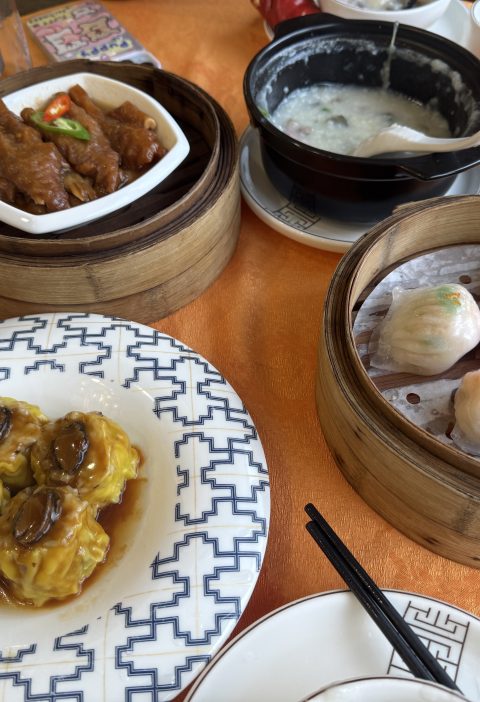
The first time I tried cheung fun, I had no idea what I was ordering. I pointed at something on a dim sum cart that looked like white noodles rolled up. When it arrived, it was slippery, soft, and covered in sweet soy sauce. I asked my friend what it was. She said, “Rice noodle rolls. Just eat it.” I ate it. Then I ordered another one.
What is Cheung Fun?

Cheung fun translates to “intestine noodles.” Gross name, I know. It’s because the rolled-up shape kind of looks like — well, you get it.
But here’s what it actually is: rice noodle rolls. They make it by spreading rice batter on a flat steamer, steaming it into a thin, silky sheet, then rolling it up with stuff inside. Shrimp. Beef. Sometimes just plain.
The texture is the whole point. It should be soft, smooth, and slippery. Thin enough to see through. And when you bite into it, it just… gives. No chewing required.
A quick history (that I looked up)
Honestly? I don’t know if the story is true. But here’s what I read:
Back in the late Qing Dynasty in Guangdong, a teahouse owner was trying to make a new type of rice cake. Something went wrong — or right — and he ended up with thin, steamed rice sheets instead. People liked them. A lot.
That’s supposedly how cheung fun started. Street snack first, then dim sum staple.
Does the history matter when you’re eating it? Not really. But it’s a fun story to tell while you wait for your order.
What to order (and what I actually like)
Here’s the breakdown. I’ve ranked these by how often I order them.
1.Shrimp (my go-to)
Whole shrimp inside. Sweet, bouncy, and fresh. This is the classic for a reason. If a place messes up their shrimp cheung fun, don’t trust anything else on the cart.

2. Beef (solid choice)
Thin slices of marinated beef. Savory, a little richer than shrimp. Good if you want something heartier.

3. Char siu (bbq pork)
Sweet, slightly caramelized pork. The contrast between the sweet pork and the plain rice sheet works really well. This is my second favorite.

4. Plain (underrated)
No filling. Just the rice sheet and sauce. Sounds boring, but it’s actually the best way to tell if the rice sheet is good. A bad plain cheung fun is sad. A good one is surprisingly tasty.

5. Fried dough (wild card)
This one is weird in the best way. They wrap crispy fried dough inside the soft rice sheet. Crunchy outside, soft inside. Textural chaos. I love it. Not everyone does. Try it once and decide for yourself.

My order: Shrimp + Char siu. Every time.
How it’s made (from what I’ve watched)

I’ve never made cheung fun from scratch. Seems like a pain. But I’ve watched enough dim sum chefs to know how it works.
The old way:
Rice batter (rice flour, wheat starch, water) gets poured onto a cloth stretched over a steamer. Steam for 2-3 minutes. The sheet turns translucent. Add fillings. Scrape it off with a special tool. Roll it up. Done.
The whole thing takes a few minutes. Has to be fast, while the noodle is still hot and soft.
The machine way:
Some places use machines now. Faster. More consistent. You can make a lot more in less time.
Does hand-made taste better?
Maybe? A little? Honestly, I can’t always tell the difference. Good cheung fun is good cheung fun. If it’s fresh and the texture is right, I don’t care if a machine made it.
The sauce (don’t skip this)
The sauce matters almost as much as the noodle itself. Too salty and it ruins everything. Too thin and it just runs off.
The classic version is a mix of light soy, dark soy, a little sugar, and water. Sometimes a touch of oyster sauce or sesame oil. It should be slightly sweet and thick enough to stick to the noodle without turning it into a soggy mess.
In Hong Kong, some places add peanut sauce or hoisin. Chili oil on the side if you want heat.
My tip: If the sauce is bland, the whole dish is bland. Don’t be shy. Ask for extra if you need it.
Where to get it
I’m not going to pretend I’ve eaten cheung fun everywhere. But here’s what I know.
Guangzhou
Street stalls in the morning. That’s the real deal. They’re cranking out fresh rolls for people on their way to work. Find one with a long line and a cloud of steam. You won’t regret it.
Hong Kong
Tim Ho Wan is famous for a reason. Their cheung fun is solid. But honestly? Some of the best I’ve had in HK was at random neighborhood spots. Look for places packed with old locals. They know what’s good.
Elsewhere (US, UK, Australia)
Any decent Cantonese dim sum place will have it. The quality is hit or miss. A good sign? If they make it fresh to order, not sitting around on a cart. And if the rice sheet isn’t gummy or thick, you’re in the right place.
My rule: If the restaurant feels like a wedding banquet hall, the cheung fun is probably fine but not great. Small, busy, noisy spots usually do it better.
Does it taste different in different places?
Honestly? The differences aren’t huge. But here’s what I’ve noticed.
Guangzhou — Thicker rolls. More filling. Heartier. Feels like street food, because it is.
Hong Kong — Thinner sheets. Neater presentation. Feels more “restaurant.” Still delicious.
Chaozhou / Teochew — Sometimes comes with peanut sauce or pickled veggies. Different vibe. Worth trying if you see it.
My take: I’ve had great cheung fun in all these places. The differences are subtle. Don’t stress about finding the “right” regional version. Just eat it.
Final Thoughts
I used to skip cheung fun because it looked too plain. Now it’s one of the first things I look for on the dim sum cart.
So next time you’re at a Cantonese restaurant, don’t overlook it. Order it. Try it. You might be surprised.
And if you get a bad one? Don’t give up. A good cheung fun is worth finding.